
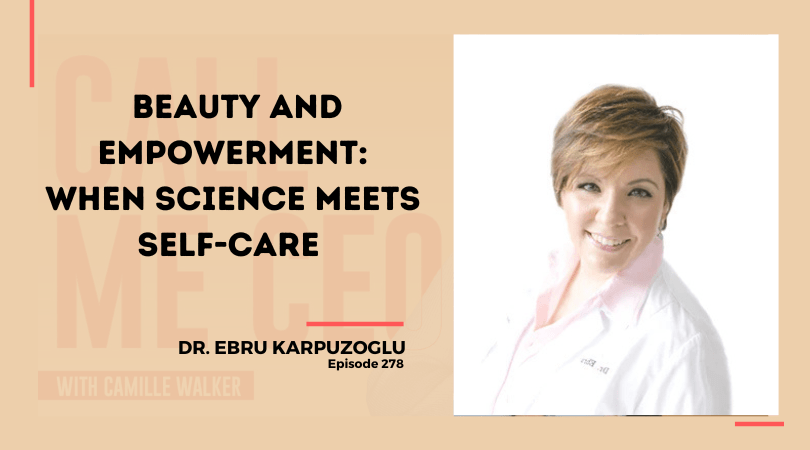
Beauty marketing loves a quick fix, but skin doesn’t. What we see on the surface is a living conversation between stress, hormones, immunity, and the quality of what we apply. Our guest, an immunologist turned founder, explains why the real story is inflammaging, the chronic, low-grade inflammation fueled by modern stress that quietly erodes collagen and elasticity. Acute inflammation helps us heal; chronic is the slow burn that ages us early. The antidote isn’t a dozen trendy serums. It’s evidence-based formulas that support the barrier and microbiome, paired with daily habits that dial down cortisol and protect long-term skin health. This is a call to trade hype for science and clutter for clarity.
Her path began in the lab, where long days, poor sleep, and pressure showed up as cystic acne and hyper-reactive skin. The disconnect was infuriating: world-class research on immunity existed, yet products relied on a single “hero” ingredient diluted by fillers. When her father’s cancer treatments left his skin paper-dry, a mass-market cream triggered a severe reaction while her own prototype calmed it in an hour. That moment cemented a mission: no cutting corners on actives, stability, or packaging. Glass over plastic to avoid leaching, tight sourcing, and formulations where ingredients cooperate rather than compete. The result is fewer multitasking products that actually perform and save money over time because you need less and layer less.
Inflammaging thrives on modern life: relentless alerts, short sleep, processed food, and constant output. We can’t escape stress, but we can shift its impact. Start free: three slow breaths to quiet the monkey chatter, five minutes under a warm shower to downshift your nervous system, a simple walk-and-talk with a trusted friend to process and reset. Movement reduces cortisol and boosts endorphins; consistent sleep and sunlight help regulate inflammation. On nutrition, restraint beats excess. Iron and vitamin D are common gaps for women; supplement thoughtfully and test when possible. Fat-soluble vitamins A, D, E, and K can accumulate, so don’t megadose blindly. Liquid collagen won’t rescue a chaotic lifestyle. Whole proteins, colorful produce, minerals, and hydration do more—especially when your skincare barrier isn’t constantly irritated.
Teen skincare is another stress test for common sense. Young skin is still changing, so less is wiser: gentle cleanser, moisturizer, and a broad-spectrum sunscreen. Retinoids and strong actives marketed via influencers can backfire, creating sensitivity that sends kids to dermatologists. The same principle applies to adults: respect the barrier. An effective routine is small and steady. Ingredients should aim to reduce signs of chronic inflammation, fortify the barrier, and support the microbiome, not nuke it. If a product seems implausibly cheap for what it claims, ask where corners were cut—purity, concentration, or packaging. You’re not rich enough to buy cheap, because you pay later with reactive skin and extra care.
Beyond bottles, redefine beauty on your terms. The industry profits when we feel “not enough.” Real power is noticing what your skin tells you and responding with patience and quality. Create a five-minute ritual you protect fiercely: apply a well-formulated cream, breathe, feel your face wake up under your hands. That small moment is self-care without the fluff. Build a grounding network—an honest friend who calls you out and cheers you on. It’s easier to stay consistent when someone mirrors your progress. Invest in science, not celebrity. Invest in yourself, not the pile of products promising a shortcut you don’t need.
Resources:
Website: www.aveseena.com
Book: Empire of Mirrors: Exposé of Beauty Untold (available wherever books are sold)
The Ultimate Time Audit & Productivity System (Freebie)
Grab it here: TIME AUDIT WORKBOOK
How to Hire Your First VA for $27
Get it now: GROWTH CHEATSHEET
Discover Your WHY – Free 5-Day Workshop
Sign up for free here: DISCOVER YOUR WHY
The Mom Balance Playbook (Freebie for Managing the Mayhem)
Download here: MOM BALANCE PLAYBOOK
Hire a VA or start your VA business here: https://camillewalker.co/
5-Minute Meditations for Kids Podcast
Listen & subscribe here: APPLE SPOTIFY
Top 100 Mompreneur Podcasts: https://podcast.feedspot.com/mompreneur_podcasts/
Connect with Camille Walker:
Follow Camille on Instagram: www.instagram.com/CamilleWalker.co
Follow Call Me CEO on Instagram: www.instagram.com/callmeceopodcast
Ebru: 0:00
You're not rich enough to spend your money on cheap products. This could be skincare, this could be a car, this could be your jeans, doesn't matter. You're not rich enough to spend your money on cheap products because then you end up paying more.
Camille: 0:25
So you want to make an impact. You're thinking about starting a business, sharing your voice. How do women do it that handle motherhood, family, and still chase after those dreams? We'll listen each week as we dive into the stories of women who know. This is Call Me CEO. Welcome back, everyone, to Call Me CEO. This is your host, Camille Walker, and today we are diving into the science of beauty, self-care, and empowerment with my incredible guest, Dr. Ibro Karpuzolu. And did I get it right? A little bit? Yes. Close. Close enough.
unknown: 1:03
Yeah.
Camille: 1:03
Dr. Ibro is an immunologist trained in molecular medicine and the founder of EfCena, the first skincare brand to focus on inflammaging, the chronic low-grade inflammation linked to aging and skin sensitivity. She is the author of Empire of Mirrors, Expose of Beauty Untold, a fascinating book that explores how science, psychology, and the beauty industry intersect to shape how we see ourselves. So a lot to dive in here today, Dr. Iberu. Thank you so much for being on the show today.
Ebru: 1:34
Thank you for having me, Camille. It's amazing to be here. And hi, everyone, for thank you for listening to us.
Camille: 1:40
Yeah. Thank you for being here with us. It is. There's so many things to be listening to. And I think what I love the most about your topic and how it's so different from so many women that I've talked to, or especially when it's dealing with beauty and health and wellness and mindset, it's all coming together, but for the first time, really talking about how it affects our skin. So can you tell me a little bit how you got into the study of immunology? Oh my gosh, if I can even say the word, immunology, and then also how it came into your practice of creating your skincare brand.
Ebru: 2:16
Sure. Um how I got into immunology is during undergrad because I had this amazing professor who looked like and so like Sean Connery, you know, and uh he was teaching immunology and he thought immunology in a way that it wasn't boring at all. He thought, like, okay, this is your body, and this is your private army, and this is what's happening. So I literally fell in love with immunology because it was my private army, it protects me from everything. And I decided to do uh PhD and immunology. And also my subject was why women have a stronger immune system and why do they get more autoimmune diseases and how estrogen and endocrine disruptors like parabens and uh bisphenol A and all that affects our immune system and what happens to our kids. So that was my study. However, when I was doing my PhD, um, it was very hard, you know, like um I was there for 12 hours a day, 14 hours a day, no weekends, nothing. Of course, that takes a toll on your immune system and how how stressed you are. So back then, this is 2000s, nobody thought talked about how the stress impacts your daily life and makes you more vulnerable to diseases. I mean, that's one of the things. We knew the connection of cortisol, increased cortisol affecting the immune system, but it was a mainstream, and I was experiencing everything firsthand. I mean, talk about cystic acne on my chin. At one point I was freaking out. Do I have like cancer on my chin? It was hurting so bad, but breakouts everywhere, and I couldn't sleep because I was working non-stop. So that is also like all that stress started reflecting on my skin, and I was spending tons of money, you know, on these brands Clinique, Glamer, you name it, everything to fix my skin, and it was getting worse. And when you're a PhD student, even Clinique is too expensive. And I was pissed. I was pissed because we have all this science, and we had it back then, but these brands still, by the way, chose not to integrate that information, that science into our skincare. And we were paying for one hero ingredient filled up with fillers and all that, and wasn't helping me. That's I think when I got really mad as a consumer and also as a scientist, because I was like, I'm spending this money, I want to see the science, I want to see the results. And they were like putting all these pretty looking ladies, you know, look like mutants, and I called supermodels mutants, by the way. And uh, they look fantastic, and there's no way my skin is gonna look like that because there's Photoshop, too. So that's how I started integrating immunology into the skincare and uh into the formulations. So that was one of the things.
Camille: 5:40
Wow. And as you're explaining this story of how this happened to you and how this opened the door, what was that leap for you going from student to now entrepreneur of taking that clarity for science, skin care, and emotional health?
Ebru: 5:57
Well, it was my dad, to be honest. He was a transplant surgeon and he was going through severe cancer treatments, you know, radiotherapy, chemotherapy, immunotherapy, you name it. And uh his skin was, of course, really dry. And his doctor gave him because his skin was like paper dry, really bad. Um, that's what happens actually. And his skin, he needed moisturizing, right? So his doctor said, and he's he's an MD. MDs are the worst patients, by the way. I can tell you that one. So his doctor said, use userine, you know, like to prevent this drying. So I took his userine was finished, I took some back, and he broke off. Like his skin turned red completely, and he's yelling at me. He's like, You got me the wrong thing, and I'm looking at the ingredients, it's exactly the same thing. But here's the thing with big brands, you don't know where they're purchasing it, right? They will purchase the ingredients wherever is the cheapest, and you know, right now they're kind of paying more attention to cleanliness and all that, but still, I mean it's not enough. So he's yelling at me. I was like, Dad, I'm telling you, it's the same thing. And he freaked out because it was all red and horrible. So I gave him my cream and I was like, use this, it needs to calm it down, and it's already red already. And I went in my room, I was hiding literally, and he was like an hour later, he was like, Come down here. I was like, Oh god, I'm in trouble. And I went there, he showed me his arm, and it was okay, no redness, nothing. And he was like, sit down, you're gonna tell me what you're doing. Because until then, I was just making stuff for my own because I was so tired of with these brands and the cheap brands and the more expensive brands. I was tired of them. So he said, You're doing something here, you need to explain to me. So I started explaining the science, and we went really deep. We went to the dermatology, we went to the biochemistry, we went to the immunology, and boy, did he go deep. And then a couple hours later, he's like, You're doing something good here. Keep on doing. You need to share this with people because this is good. You're doing the right thing. Share the science, share the quality, share it. I was like, that is not gonna be easy. Like, share it. That is not gonna be cheap. All these ingredients, I'm getting the best thing. I mean, most of them are coming from France and Italy, and all no, no, you're gonna do it, and I don't care how you do it. I was like, okay, that's how it started, the entrepreneurship. Everything bootstrap, no um, you know, investments from outside. We had several people approaching for to become investors, and I said no, because they were like, Oh, you can save money here. I'm like, no, I'm not gonna save money here. If I save money here, the quality is gonna drop. And if the quality is gonna drop, the results are gonna go bunker. I don't want this. What's the point? You know, and till today, you know, our price range is between 40 to 57, uh 157, and uh, we have another product that's around uh 460. But I want to make something very clear here. Uh, we can't we had a couple customers saying that it's very expensive, and I said, no, it's not very expensive. First of all, we haven't increased the prices since 2020, where people have been increasing the prices like crazy. We got the best ingredients in the market, you know, the most clean, the most effective, the most fresh, whatever you need. So, because I'm using it, my mom is using it, my husband is using it, you know. So that comes with a cost, of course. You know, you can't put this product in plastic because plastic leaches bisphenol into the products. There are studies about that. So you need to use glass. That comes with a price, you know, after all, so these tariffs. Still, we didn't increase the prices. So, yes, we might be, we may not be mass pricing, we're not prestige pricing, we're not selling $170 worth of one lipstick like leave it on, but we're selling quality, we're offering quality. So people ask me, so what does it make per day? If you use the cream, cream you can use it for 60 days, two months, that's two dollars per piece per for your pay face per day. That's it, two dollars, and it's tiny dollar, so it's around one dollar and fifty-seven cents. I I calculated it, I was curious. And 60 the cost efficiency comes from that. If you have an effective product, multitasking, you don't need to use tons of cream, you don't need to use a lot of cream on your face. By the way, this your skin doesn't like a lot of products on your face, and you end up getting the results. That's the thing. So, entrepreneurship is not easy. I mean, if anybody's listening out there, it's not easy, it's a very, very lonely place to be because everybody's gonna criticize you for everything you do. You just walk the path. That's it.
Camille: 11:42
Yeah, well, I love that your story is so much from a place of need and also a commitment to quality, because like you said, especially when it comes to our skin and what's going into our bodies and absorbed through our biggest organ, which is our skin, investing in that is worth it. Now, your Evcina is based primarily around, and tell me uh exactly what this means to you around infl inflammaging. So we're combating inflammation and also how our skin ages. So, can you tell us a little bit more for those of us that don't know nearly as much what that means in inflammation and how our skin ages? How are we to combat that science, that natural science, with what your product offers?
Ebru: 12:37
These days, I'm I'm the first to talk about inflammation and inflammation in the beauty industry, to be honest. Funny enough. And what does inflammation mean? Let me explain that. It is a combination of two words, inflammation plus aging. So when you we are stressed a lot these days, I mean, it's incredible. Since COVID, we didn't catch a break, you know, and uh unfortunately that stress cortisol and that causes micrograde level of inflammation in your body, which causes us to age faster prematurely. So we're not aging like we should be aging in the 1980s. We're aging faster today because we're so stressed and so tired and so overworked, and that induces a mechanism in your body called inflammation. So let's go back to the inflammation. Unfortunately, today the supplement industry, the nutrition industry, and the beauty industry have been pushing the word inflammation as something bad. There are types of inflammation, we need to clarify that. Acute inflammation, which is when the bacteria comes in, your body says, your body's immune system, your own private army says, Oh God, I'm getting invaded by, I don't know, a virus, and I need to protect you. So the inflammation goes up, destroys the virus, destroys the bacteria, and then after that point, after everything is destroyed, everything goes down. All the inflammation starts going down, and the healing process starts. So that inflammation is what keeps us alive, the acute inflammation. So that's a good thing. Inflammation is like you leave your car on all the time and it's wearing down your body, it is eating away your collagen tissue, your elastin um filaments, everything. You don't want that, but that happens. And then there is the chronic inflammation, which is the highest of inflammation, which we do not want. And you can see this in autohuman diseases, you can see this in cancer, all kinds of diseases. So that is very, very bad for you. And it happens when you have a severe disease, but the inflammation is in between. So, with that said, can we call control inflammation? Yes, we can. Yes, we can. With life changes, with uh couple wellness steps, we can change that. However, it's happening to all of us these days. That's why I've been talking about it. And uh, how does a skincare product help you? Uh, not every skincare formulation is designed to do this. There are certain ingredients that are really good against signs of inflammation, helps you, helps the skin barrier, supports the skin microbiome, and at the end supports against these detrimental effects of signs of inflammation. So that's how we formulate. We gather the best ingredients that are proven by scientific research, and we combine them and we make sure they work together, not against each other. That's why it's a lot of work, and then we put them in one cream, one serum, one oil, because I don't want you to spend your money on tons of different face oils, tons of different serums. You just need one, and that makes life easier. You know, you save time, you save money, and your skin will say, Okay, thank you for you're not touching me every second, so thank you. Because skin doesn't like that. Skin doesn't like it.
Camille: 16:30
This cream that you developed, you know, you're poking the professor. Yeah, this cream that you developed, is this what you were creating as a student then when you were having your own inflammation and your prototype.
Ebru: 16:46
That was that was a prototype. That was that was the prototype, yeah. That was a prototype. The current one we have has uh five different awards, it has been um has the safe seal and everything, and it does work. I mean, you put it on next day, your skin feels like baby bottom. I'm not gonna kid you. It's pretty effective. So yeah.
Camille: 17:11
What would you say in addition to this cream that you've developed is a good idea for practices for especially as women, what we should be consuming? Are you a big fan of liquid collagen and what other I mean, of course, a healthy diet is key, but what are some of those things that you find are very typical for women to be lacking from their diets, or maybe something that they need to add that they are forgetting?
Ebru: 17:41
Definitely. I mean, iron, iron is one of them. Uh, vitamin D, because we don't see the sun as much as before. Uh, those are two things. Um, they they need to be supplemented. And for the iron, um, especially with uh reproductive ages that are going through they're not in menopausal stages, the iron uh levels will change with your cycle, you know, it will go up and down. So, yes, especially if you're a vegetarian or vegan, you will have less iron and you need it. So that's one of the things. Liquid collagen, I'm I'm not a big fan personally. I mean, I tried it myself because I was curious. I know the studies, but I was like, well, let's try it again. But it didn't make a difference, it didn't make a difference for me. Uh, also, there is a trend going these days. Everybody's trying to oversupplement themselves, unfortunately. Um, we need to be very careful about that. There are certain supplements that are uh dissolved in oil, like vitamin A, D, E, and K. And uh uh these would put pressure on your liver. So we need to be careful on which supplements we are getting and also where we're getting them from, because they're not completely regulated by a health um office, let's call it, in the United States.
Camille: 19:15
Yeah, yeah. Well, the United States has a lot of stuff in our and a lot of things that I wish were not that the way that they are, right? So, for you personally, what are some everyday habits or ingredients that can help calm inflammation and support healthy aging? Are you ready to reclaim your time and finally focus on the tasks that actually grow your business? Whether you're looking to hire a VA or thinking about becoming one, I've got the perfect solution for you. If you're overwhelmed with your business, I personally connect entrepreneurs with highly trained virtual assistants, graduates of my 60 days to VA program, so you can confidently outsource and scale. Or if you're looking for a flexible, profitable business. Business from home, my 60 days to VA course gives you everything you need to have to become a successful assistant without the trial and error. Head to CamilleWalker.co to get started today. Whether you're hiring or launching your own business, I'm here to help you make it happen. You can also grab this link below and schedule a free discovery call with me to see if it's the right fit for you.
Ebru: 20:24
So we can start with the one that is for free. Go into the corner, sit down, breathe. Do not just focus on the breathing. You know, um, interestingly enough, if you take very deep three breaths, you're gonna realize your mind is wandering from the thought. Unfortunately, we're our worst enemy. Our brain has this monkey chatter. I call it monkey chatter. It goes like, can't do that, and I'm like, shut up. So the best way is three breaths. Go into the corner, sit down, three deep breaths, and everything is gonna be fine. And then repeat this to yourself. Ask this to yourself this problem that I am having anxiety right now, will it be important in five years or three years? Will I even care about this problem? And if the if the that little voice inside you says, no, and then there you go, you have your answer. So look inside you sometimes. That that is the cheapest way, okay? Um, definitely try to move as much as possible, uh, because that increases endorphins and decreases adrenaline and cortisol. We want to decrease the cortisol to get rid of inflammation and inflammation. By the way, we want the inflammation, we want the acute inflammation. I want to clarify that. So another thing is eat good foods as much as you can. I mean, of course, have your little treat, have your bottle, like not bottle, uh a glass of wine, your bottle, and uh ice cream, uh, but not always, time to time, because everything in moderation, and that's so true. And uh try to go for the foods that your body wants. Interestingly, your body talks to you. Interestingly, sometimes you're gonna want to eat meat, that means you your body is craving for iron, or sometimes you're gonna go for oranges, that means your body is craving for vitamin C, right? Stuff like that. Listen to your body, and then look at your skin, look at your outer surface, and skin is the way your body is talking to you. So you can feel the aches and joints and all that, but sometimes you your body will do a thing and say, like you break out or you start looking horrible. That's your body's way saying, Okay, there's something wrong going on here. You need to look at me, look at me and help me. So when that's happening, just stop, have a look at yourself because your skin is your best friend and trying to talk to you and listen. And go for the clean ingredients, clean products. Please stay away from cheap products, cheap skincare, and always think this. How is it this cheap? Where did they cut corners from? What is in here? You know, it always makes me question when I see a $10 anti-aging cream. It says it has Matrixal. I know the price of Matrixal in kilograms. It's not that cheap, even if you buy in bulk. Where are they cutting corners from? The very expensive celebrities, nah-uh. Stay away those from those two, because celebrities have uh dermatologists and plastic surgeons on call 24-7. They're not your role models, they're they're living in the ivy tower that and we're not gonna be there. Go for the real people.
Camille: 24:12
So I think that's a good that's really good advice. Do you think that there is a way that we as women can reconnect with self-care in a way that feels empowering rather than another to do?
Ebru: 24:23
Us women are very, very powerful. I mean, yes, the men are in powerful positions, but without us, they're kind of they're kind of in trouble. We're very powerful and we're multitasking and we're constantly doing stuff. And uh, I have one daughter, but kudos to women who have more than one. They're my superheroes. And self-care, unfortunately, the industry has pushed into this luxury thing. Self-care is going into the shower and standing under the shower and doing nothing. That's self-care. Or having your coffee outside on your porch and not talking to anyone for five minutes, just looking and breathing. That is self-care. Or putting your cream on for five minutes, lock yourself into the bathroom and say, I'm not talking to anybody, just stay away and growl at your husband. You want to die? No, so stay away, you know, and then you do that five minutes, smell the cream, feel your skin. Five minutes. That's your time. You deserve that time, so deserve it. I mean, nobody's gonna give it to you if you don't take it. Take it, it's yours.
Camille: 25:40
I love that advice. That is so true. Now, you have written a book called Empire of Mirrors that talks about the beauty industry peeling back the layers. What compelled you to write the book and what truth did you most want to reveal about the beauty industry?
Ebru: 26:00
Well, first of all, it's not a big book. It's it's like 80 pages or something because I wanted everybody to read it really fast. But what compelled me? I think I'm tired of the BS in the industry, you know, like how they become so famous when they spend millions of dollars into PR with a product that I wouldn't even put on my cat's butt. Um I'm saying this. I wouldn't, I mean, my cat would hate me. Uh, but that's the thing, you know, like all these people are going for the branding and the pretty bottles, like drunk elephant, right? They they they have the pretty bottles, and or like I'm not gonna even say it here. It's all written in the book. I wrote it all about that. So I started with our story, how and why we wanted to found a beauty brand. But then when I was writing this book, I turned it into this. If you're from outside of the industry, what do you need to see? What's behind the mirrors? That it's it's a complete empire of mirrors. You can shatter it with one flick, and it's an expensive empire. You know, nobody wants you to see the behind. So that's why I wrote it for the beauty connoisseurs and who wants to see the behind, but I also wrote it for the people who want to start a beauty brand. What does it take? What are the losses? What are the gains? What do you need to do? That kind of thing. So it's it's it's a one of a kind, it's a noir thriller, it makes you cry, it makes you think, it makes you like go, whoa. It's a fascinating book. And also, I have a section where we talk about the mistakes, the biggest mistakes made in the beauty industry, and what it would mean for a beauty founder or somebody who wants to start a beauty brand, or somebody who is purchasing from these people, and what does it mean for you?
Camille: 28:08
Yeah, that's that makes sense. I'm excited to read it. I haven't read it yet, and now I'm wanting to see what's in there. What surprised you most while researching and writing The Empire of Mirrors? What surprised me the most?
Ebru: 28:21
How much BS is out there. I wasn't expecting that much BF, to be honest. I mean, how much money is moving behind the scenes and um how bad the products are. Yeah, you know, it's just amazing. And how people are like blindfolded with all the glitter, you know? Absolutely.
Camille: 28:43
Well, it's interesting to me too because yeah, I have a daughter who is almost 15, and there's been this insurgence of young women who are interested in skincare, which is amazing. But I do worry that what they're putting on their skin at such a young age and the quality of the product, I don't know that they're doing themselves favors sometimes, that it could actually cause more inflammation or more problems than good because they're putting things on their skin or too much product when they don't really need it. What has been your experience with that in terms of this new? But in other ways, I think it's really good because my daughter is much more concerned about wearing sunblock than I ever was as a kid, or you know, taking better care of her skin. So I think that there's definitely benefits with that, but it's interesting to see how many young, young girls are interested in all the beauty care routines.
Ebru: 29:44
True. I mean, there's a pros and cons for everything, and same with this. For example, uh we talked about drunk elephant, and it's in the book, but let me give you a little snippet about that. So, drunk elephant, at one point on TikTok, all these influencers and their young influencers, 15, 16, 17, they were going for drunk elephant uh products, and they drunk elephant products are not designed for the teenagers, they're designed for 25 and plus that has retinol and peptides and everything. So they have become the Sephora kids and they're going there. However, what happened at the end? Their skins were getting uh bad. They were going to the dermatologist, and there were a lot of dermatologists online saying that please stop this. It came to a point where I think was it Boston, one of the uh state attorneys said there must be a limit for young people, teenagers to use products that are designed for adults, you know, 30 and up. Um, that case brought a lot of noise, and but it didn't go anywhere. However, the main point was oh, let's push this on the young audience because they're gonna buy it. And still big brands are doing this. So, what happens at the end? First of all, the young skins, teenager skins are developing. Yes, for skin, yes, for sunscreen, definitely a very high-quality sunscreen, but their skin is developing, they're going through hormonal changes more than us adults that age. Uh, some of them go through severe acne, some of them go through very dry skin types, but it's not normal. It goes up and down, ups and down. So that's why selecting a skincare routine very clean, very simple, very easy is the key. And the least amount of products, a cleanser and a moisturizer and a sunscreen, that is more than enough for a younger person.
Camille: 31:53
Do you have a few? Yeah. Do you have advice on which brand for that? Because I have a few, I have three teenagers right now.
Ebru: 32:02
And I well, I I can suggest our cleanser and our serum. Our cream would be too heavy for them.
Camille: 32:09
Uh-huh.
Ebru: 32:09
Uh, but uh on top of my head, I don't remember. I need to look into it because I don't have a teenager, I have a five-year-old. Thank God she's not doing skincare right now.
unknown: 32:20
Yeah.
Ebru: 32:20
So she's very interested. But um I can suggest our cleanser and our serum. And a little bit, not too much. Yeah. Their skin is already perfect. Already perfect. And if there is acne, um definitely see a dermatologist because they would know what to do and figure out if there is a deeper problem or if it's a hormonal teenager acne.
Camille: 32:49
Yeah, that makes sense. Now, how do you personally define beauty today after everything that you've studied and created?
Ebru: 33:00
Well, there's two kinds of beauty when you think about it. Uh, the beauty that the industry pushes us. Unfortunately, that's not pretty beauty. That beauty tells you you're not enough. You night, you need to buy more products, more makeup, more skincare, so you can look pretty and feel good. That is so wrong at so many levels. Insecurities, problems down the road. Okay, that is the beauty industry is pushing, and it has become very aggressive uh in the last four or five years because uh there is a flood of brands in the market, and uh the economy is not doing that great around the world, so they're becoming more and more aggressive, working with influencers. All celebrities are coming out and saying, Look at me, I'm so pretty. I'm like, Yeah, you have a dermatologist and an aesthetician literally living in your house. What do you think? So that is the ugly face of beauty, okay? But then there is your beauty, your balance, your, I call it wellness beauty, where you ground yourself, you know your needs, you don't, you know, um get boggled down by the BS that the industry is pushing you. I'm in the beauty industry, but I am against this narrative. And the science is important. Go for the science. So focus on your needs, don't look at the pricing, get what you need. And if you want to call it the warding yourself, do that, but get the best one for you. Not the one that's been pushed to you by a celebrity or by a marketing campaign. So two kinds of beauty.
Camille: 34:51
I love that. And for you personally, what daily rituals or practices to you do you use to stay grounded as a woman, as a CEO, as a mother? I mean, you have a lot going on. So, what are some practices that help you to stay grounded and aligned?
Ebru: 35:08
Interesting enough, I'm a Pisces with rising Sagittarius, okay? And water calms me down. I I like standing under the you know shower and just feel the water. And for some reason that grounds me. Uh, I maybe because I'm a Pisces, I don't know. But that helps me. And uh I have good friends, and I would recommend this to everyone. If you don't have a wellness health coach that you can bicker to, get a friend and have your venting sessions. I like those. And uh I have my venting sessions with my friends that helps me, and they're very honest, very honest, and they go like, okay, you're you're acting stupid now. They tell me right away, and I tell them right away. So you need a good friend to ground you sometimes, to pull you down, say that okay, now you're you're acting stupid. Get back to yourself, or when you're feeling bad for yourself, they say, No, you did this, this, this. It's awesome. See yourself, have a good friend. This could be even your husband. I mean, if you can get them on board, because sometimes they don't want to listen, right? So those are the two things, and um, you know, I have my five minutes in the bathroom where I don't talk to anybody. I'm like, do not come in. I'm doing my skincare, I'm putting on my green. So three things, three things, and they cost nothing. So yeah, I highly recommend this to everyone.
Camille: 36:39
No, that is so good. I actually call my coined term is a walk and talk, and that's when you get someone on the phone or in person that you can motion, have motion and walk and talk through what's going on in your mind, because I feel like exercise is a washing machine of the brain as well as talking it out. Sometimes you don't even know how you're feeling about something until you talk it out and process it as you're moving and talking to someone you trust. So I agree with you completely. I exact I I completely agree on that.
Ebru: 37:14
But sometimes I can't do the walking because mine will be like I call this my one of my best friends and like, look, we're having a bitching session. This is not a venture, it's a bitching session, so get ready. Oh, let me get coffee. That's one of the things I can't I shouldn't be walking around because people will hear me cussing, you know?
Camille: 37:35
Yeah. Oh, I love it. So, for all the women listening, what is one final thing that you would have them take away from this conversation in terms of their skin, their wellness, and moving forward in life? Skin.
Ebru: 37:53
Uh you're not rich enough to spend your money on cheap products. This could be skincare, this could be a car, this could be your genes, doesn't matter. You're not rich enough to spend your money on cheap products because then you end up paying more. You bad skin products, you'll end up with going to the dermatologist. Bad car, you end up spending more money. But you're rich enough to invest in yourself. Invest in yourself. That is about skincare and life. Wellness, definitely have a friend to have the conversation to. And if not, definitely reach out to a wellness or a health coach and have someone mirror you sometimes, because sometimes we are so boggled down in our own brain, we cannot see how awesome we are, and you're awesome. I mean, everyone has something to offer with all that life experience. It's amazing. So know you're awesome.
Camille: 39:00
Oh, I love that. Oh, this has been so good. Thank you so much for reminding us that we all have an inner knowing and listening to that and really investing in ourselves. I love that you said self-care can be as simple as taking those breaths, three, the three breaths, getting in the shower, breathing, taking that time to drink your special drink and put on your face cream. These are all simple, beautiful moments that we can gift to ourselves and that we can cultivate through awareness and care and connecting with ourselves. And I think that that it's really interesting when I see my kids and even my partner, that he'll have a spot. He we call it his stress it. So he'll get him like between his eyebrows. And my son, my oldest, is a senior in high school, and he currently has what we call stress it right between his eyebrows. And I said, How are you doing? And we just had a chat and I said, You have your stress it. And he's like, I know. I have so much going on with college applications and all of these different things. And There was a college that he was planning to um the apply for, but he said, I just don't really feel like this is the school for me. And I said, you know, if this isn't feeling right to you, that this isn't where you're meant to be, then don't apply. I don't want to take away your self-knowing and your introspection. If it's not feeling right, then let's practice your efforts or put them somewhere else because this just isn't it. So I think that it's important that we acknowledge that for ourselves and for our children. And Dr. Ibru, I'm so grateful for you to be bringing forward this groundbreaking work of talking about what it really means to understand and know our own beauty and to invest in ourselves. I'm so excited to try out your cream. I'm hoping by the time this is live, I can give you a review of it because I haven't used it yet, but I'm planning to. So please tell everyone where they can find your products and support you.
Ebru: 40:55
Sure. Uh, you can visit us at our website, Avicina A-V-E-S-E-E-N-A.com. And we're on Instagram, Avicina again. We're on Pinterest. And uh our book is on Amazon, Empire of Mirrors. It's fun, it's dark. It is every little secret about beauty industry. So yeah.
Camille: 41:20
Sounds good. It sounds like it needs to be made into a Netflix documentary. That's what I'm hearing.
Ebru: 41:24
I would love to see Kate Blanchett.
Camille: 41:27
She would pull it off or Helen Mirren. Yes, that would be amazing. All right, everyone. Well, thank you so much for tuning in. If you found this inspiring and you want to share, please pass this episode along. It helps to encourage all women everywhere, as is our goal here at Call Me CEO. Thank you for tuning in and we will see you next time. Hey CEOs, thank you so much for spending your time with me. If you found this episode inspiring or helpful, please let me know in a comment in a five star review. You could have the chance of being a featured review on an upcoming episode. Continue the conversation on Instagram at Call Me CEO Podcast. And remember, you are the boss.
Sign up to receive email updates
Enter your name and email address below and I'll send you periodic updates about the podcast.