
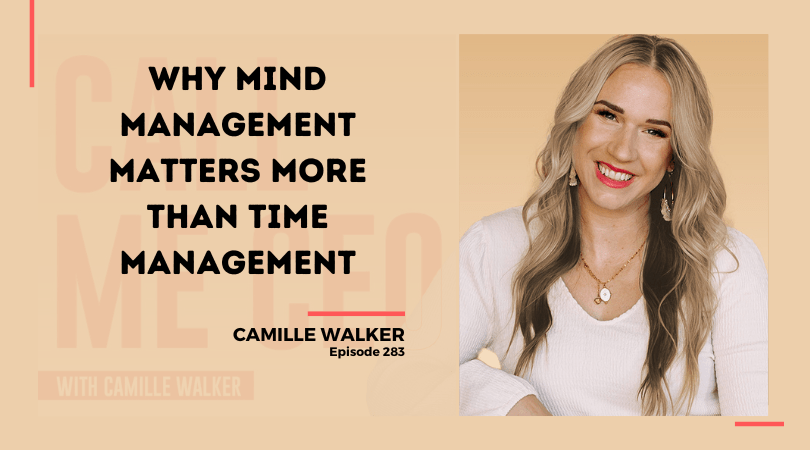
We chase better planners and tighter routines, but the real lever isn’t another calendar block. It’s mind management: the practice of choosing intentional thoughts that shape how we feel and behave under stress. When women run businesses while carrying family demands and invisible mental load, time hacks alone fall short. We don’t fail for lack of hours; we drain our energy with thoughts like I’m behind or It’s never enough. Those sentences create pressure that erodes focus. The shift begins with noticing those defaults, then choosing useful thoughts such as I can move at a sustainable pace or I can pick what truly matters today. That mental pivot doesn’t add minutes to the clock, but it changes the quality of our minutes.
This approach pairs especially well with ruthless prioritization. Many ambitious moms stack five to ten tasks daily and feel like failures when they complete only three. A better system selects one to three must-do items that move the needle, then treats everything else as optional. That builds self-trust because your brain learns you do what you say. Success becomes leading yourself well, not checking every box. When we measure progress by alignment with values and capacity, we stop negotiating against reality. You can’t outrun a mismanaged mind with a color-coded schedule; you can build momentum with realistic commitments, calm focus, and boundaries that protect recovery.
Mind management shows up in small, repeatable rituals. Consider meal planning as a weekly thought reset. Decide once on Sunday—grocery list, family requests, nights for leftovers—and post it where you’ll see it. The win isn’t the menu; it’s removing decision spirals at 5 p.m. Then stack enjoyment: music in the kitchen, a show in your earbuds, kids assigned to simple prep. Turn dread into a designed moment. The same logic applies to business tasks: decide today’s top one to three, set a timer, and remove friction before you start. Your brain works better when it expects clarity instead of chaos.
This work matters because burnout often hides in the gap between expectations and capacity. If your roles expand, bring more players to the field: delegate chores, hire a virtual assistant, trade carpool, and streamline recurring work. The goal isn’t to do it all; it’s to ensure the important things get done by someone. Thought work makes delegation easier because you replace I should handle everything with I lead the system that handles everything. From there, daily practices compound: identify a default thought, choose a useful alternative, decide how you want to feel, and close the day by asking Did I lead myself well. Over time, you’ll notice the same to-do list feels lighter, your choices get sharper, and your energy lasts longer.
Resources:
Download the free Ultimate Time Audit to help you design calm, consistent routines
Listen to more Call Me CEO episodes on Apple Podcasts or Spotify
MIXHERS: Her Nightly Code Camille10 https://mixhers.com?current-token=Bedv3oom
Connect with Camille Walker:
Follow Camille on Instagram: www.instagram.com/CamilleWalker.co
Follow Call Me CEO on Instagram: www.instagram.com/callmeceopodcast
- MyMommyStyle.com
- Subscribe to Call Me CEO for more episodes!
- Email: callmeceopodcast@gmail.com
Camille: 0:00
With mind management, it's about intentionally choosing how you think, especially when things feel busy, heavy, or uncertain. So you want to make an impact. You're thinking about starting a business, sharing your voice. How do women do it that handle motherhood, family, and still chase after those dreams? We'll listen each week as we dive into the stories of women who know. This is Call Me CEO. Hey everyone, welcome to Call Me CEO. This is your host, Camille Walker, and this is a solo episode. It's been a minute since I've recorded one. I'm so thrilled you're here. Thank you for spending this time, and I really hope this episode has the impact on you that this concept has had on me. If you're new here, we celebrate women building businesses. And more specifically, I speak to mothers building businesses because we are tasked with a little more, a little more on our plates, our shoulders, a little more of a juggle balancing act. And it is real and it is sometimes overwhelming, if not more often than sometimes. And this idea of mind management over time management is something that has really changed the foundation of how I am approaching my schedule and my time. So if you are in a cozy place, pull out your notebook. If you are driving or walking, yay for you. I love multitasking. So I'm going to keep your company and there are show notes you can copy and paste later and add your own notes to them. Today I want to talk about how mind management is perhaps what we need to focus on more as we attack our to-do lists rather than time management. I recently did a training with Jody Moore around this concept, and it was one of the moments where everything clicks and you realize, oh, this is the missing piece. Because if you're anything like the women I work with, ambitious, driven, probably running a business, if not a couple, raising families, which listen, if you're managing your home, that's its own business. You've probably tried all the time management things just like me, better planners, color code-coded calendars, markers, time-blocking morning routines, productivity hacks, and yet you still feel behind, overwhelmed, or like no matter how efficient you are, it's never enough. I recently bought a Skylight calendar that's one of the ones that you can put in your kitchen or on your wall. And it manages not only color coordinating your kids' calendars, but also chore lists and recipes and uh to-do lists, and it will even store your recipes and your meal plans, which is amazing. It's a brand new toy from Christmas. I'm still figuring out how it works, but I'm loving it so far. However, I still am needing to figure out how to best manage my mind, even though I have this fancy new gadget. So we're going to talk about that. And if any of you have a skylight calendar and are loving it and have special tools or want to hear more about how I'm using mine and how it's working for me, let's talk about it. I would love that. Okay, so why time management isn't the real problem? Let's start there. We all have the same 24 hours in a day. No amount of planning creates more time. Time is what it is. It's exactly what it is. So what does change? I want you to think about how drained you feel during those hours when you're feeling overwhelmed, how confident you feel about making decisions, and how much resistance or clarity you bring into your work. Most of us don't struggle because we don't have enough time. We struggle because our thoughts about time are creating stress, urgency, and pressure. Thoughts like, I'm so behind, there's never enough time, I should be further along by now, I can't keep up. Those thoughts don't motivate us, they drain us. And this is where time over or mind management over time management comes in because the way that Jody actually taught us in this system is that you take all of the to-dos that you have and you create priority from the to-dos. A lot of times when I've coached women in the past, they want to, they have big lofty goals of where they want to go. And that is amazing. You're not going to reach a goal bigger than you can imagine for yourself. So I think shooting for the stars and landing on the moon is fantastic. However, a lot of times we think that we need to take on endless to-dos every single day to feel productive. And I think that that's where we get in our own way. That perhaps rather than choosing our top one to three of must-do items, we do five to 10 and then feel like a failure when we only get to three. So, in this approach of mind management, it's actually in giving yourself a better understanding of what your capacity is for every day and setting your expectations in a way that is healthy for your brain and builds relationship trust with yourself. Now, this training I've been in has taken days. It's been, I'm on the fourth of five days with this. So this is just really scratching the surface. But what I really loved about exploring being honest with the time that we have and the expectations we have for ourselves is that we are all doing the very best that we can with what we can do. And sometimes, given health constraints or demands from our families or children or the roles that we play at work and at home, we may be setting ourselves up for failure and hurting ourselves over and over by telling ourselves that we're not good enough, we're not performing well enough because we're setting our expectations so high. Are you ready to reclaim your time and finally focus on the tasks that actually grow your business? Whether you're looking to hire a VA or thinking about becoming one, I've got the perfect solution for you. If you're overwhelmed with your business, I personally connect entrepreneurs with highly trained virtual assistants, graduates of my 60 Days to VA program, so you can confidently outsource and scale. Or if you're looking for a flexible, profitable business from home, my 60 Days to VA course gives you everything you need to have to become a successful assistant without the trial and error. Head to camilwalker.co to get started today. Whether you're hiring or launching your own business, I'm here to help you make it happen. You can also grab this link below and schedule a free discovery call with me to see if it's the right fit for you. So with mind management, it's about intentionally choosing how you think, especially when things feel busy, heavy, or uncertain. Jody teaches that your results don't come from your circumstances. They actually come from your thoughts. And when it comes to productivity, this is huge because a calm, focused mind can do more in less time. A stressed, rushed mind wastes energy, second guesses, and spins. Same to-do list, completely different experience. Let me give you an example. All of us have toilets that need to be washed, laundry that needs to be done, meals that need to be made, and endless pickup. Now, as we think or approach these times or these events, we can go into that with an expectation of the mundane task that it can be. Perhaps when we're thinking about it, we think our body tenses, you feel rushed, you multitask, you feel pressure. Now instead of thinking I have everything to do and not enough time to do it, I want you to think or imagine thinking instead. Same tasks, different energy. You're more focused, you're more decisive, you're less reactive. That is mind management. So perhaps when you're going into making the meal, rather than thinking, I hate coming up with another thing to cook today, this is the worst. Maybe we shift it into thinking, I'm so grateful that I have food to feed my children and that I have the opportunity to come up with ideas to help them feel nourished and go about our day. Now, trust me when I tell you, cooking and preparing meals is not my favorite thing. But one thing that has helped me more than anything with meal prep in particular is to only go down the spiral, I guess, or the deep dive into what are we eating this week once for the week. I usually do that on Sundays when we have our family planning meetings where we meet with each of our children one-on-one. And I have a meeting with my husband one-on-one. And I will ask the kids if there's something specific that they would like to eat or help cook that day. I've even assigned days of the week to different children of mine to have them help me clean and prep and then um cook the food together. That doesn't happen all the time, especially when we're in a busier season with sports and activities. But on Sunday, that is generally when I'm setting up my grocery list. I have an idea of what we're going to do for the week and I assess what days I will be cooking and what days I will be not, that I'll be too busy where we'll be doing leftovers or takeout or whatever. And then I take that list and I put it up on a whiteboard in our kitchen. What I've found for me, and now I have the skylight calendar, so I can do it within there as well, but I still like having it on the whiteboard because when I take marker to board or pen to paper and I commit to those days of the week, even if I have to shuffle around some of those days, I know that I have the ingredients or I know that it's meals that my family will enjoy for the most part. So that coming to that process in the day when I'm actually cooking, I'm not reinventing or having to go down the, oh, what am I going to cook? Or do I even have the right ingredients? And on and on. Another thing that really helps me with this is that I have tried to create in those moments the expectation that this is in some way my time. I know this might sound harder than at other times, depending on the ages of your kids, because trust me, I've had the years of cooking with a baby strapped to me or toddlers pulling at my legs. And if you're in that season, I see you. I'm not in that stage anymore. I'm at a stage now where I can put in uh headphones and watch a Netflix as I prep my meal, or I can turn on my favorite music and make it really fun. For me, that's usually a Disney playlist or um really fun pop music from the 2000s or whatever. And I really try to make the moment as enjoyable as possible. Um, this is changing my mindset of the making it mundane and turning it more into something I enjoy. I've turned it into a system where it's not so much about managing the time as it is replacing perhaps the spinning of like what to do. I think it's in the what to do and the anticipation of like hating the thing that drags us down so much, at least it does for me. So setting a timer or making that time intentional, that mind, that mindset shift is what really moves the needle for me, making it more enjoyable. This is especially important for women and even more for moms in business because we're not only managing the needs of our work, but we're also looking at family needs, emotional labor, mental load, expectations, ours and everyone else's. So if you're not managing your time, but if you're managing your time but never managing your mind, this is where burnout becomes almost inevitable. And for me, if I get to the point of burnout, I realize that I'm not bringing enough players to the field. Meaning if I'm taking on too much, whether it's in my work or in my family life, I need to reset and really bring in others to help me tackle the to-dos. So, how do we practice mind management daily? Here are some simple ways to start shifting from time management to mind management. Notice your default thoughts about time. Pay attention to phrases you say often, like I am slammed, I'm drowning, I'm behind. No judgment here, just awareness. Choose a more useful thought, not fake positive ones, just a useful one. Examples. I'm allowed to move at a sustainable pace. I can prioritize what actually matters today, right? Limiting that one to three rather than five to 20. And I don't need to rush to be successful. I think, especially in American culture, we get lost in the rat race of more is better, or the faster I do it, the better. And that doesn't always pan out. In fact, that can sap us of energy faster than anything else. Before you open your planner, I want you to think about how you want to feel today. Do you want to feel calm, focused, grounded? Then start from that place. Measure success differently. Instead of saying, Did I do everything? You could ask, did I lead myself well today? Or did I align with my values or my decisions? That's CEO energy. Now, this is practice, how we think and use these thoughts. It's about perspective and focus, emotional regulation, and knowing that your well or your cup is the one that you are pouring from. So to make sure to really give yourself grace and time to recover and self-care is so important. And maybe you're at a season in your life where self-care is having a really nice long hot shower. Maybe you're at a time where self-care looks like a walk pushing your daughter or son in a stroller. Maybe your time of self-care is going to the gym or getting a massage. Any of those things that you can identify that help you to reset your mind and have moments of peace are so important. So when you're feeling overwhelmed, behind, or frustrated with productivity, I want you to hear this. You don't need a better planner. You don't need longer days. You need a gentler, more intentional relationship with your mind. Because when you lead with your thoughts, everything else follows. If this episode resonates with you, I'd love for you to share it, leave a review, or send it to another woman who's feeling the pressure lately. I have a freebie for you always for discovering your why or the busy mom playbook. And I would love for you to check that out. And if you have any questions or are looking for coaching, please reach out at callme CEO podcast at gmail.com. Take care, and I will see you next time. Hey CEOs, thank you so much for spending your time with me. If you found this episode inspiring or helpful, please let me know in a comment in a five star review. You could have the chance of being a featured review on an upcoming episode. Continue the conversation on Instagram at callme CEO Podcast. And remember, you are the boss.
Sign up to receive email updates
Enter your name and email address below and I'll send you periodic updates about the podcast.